
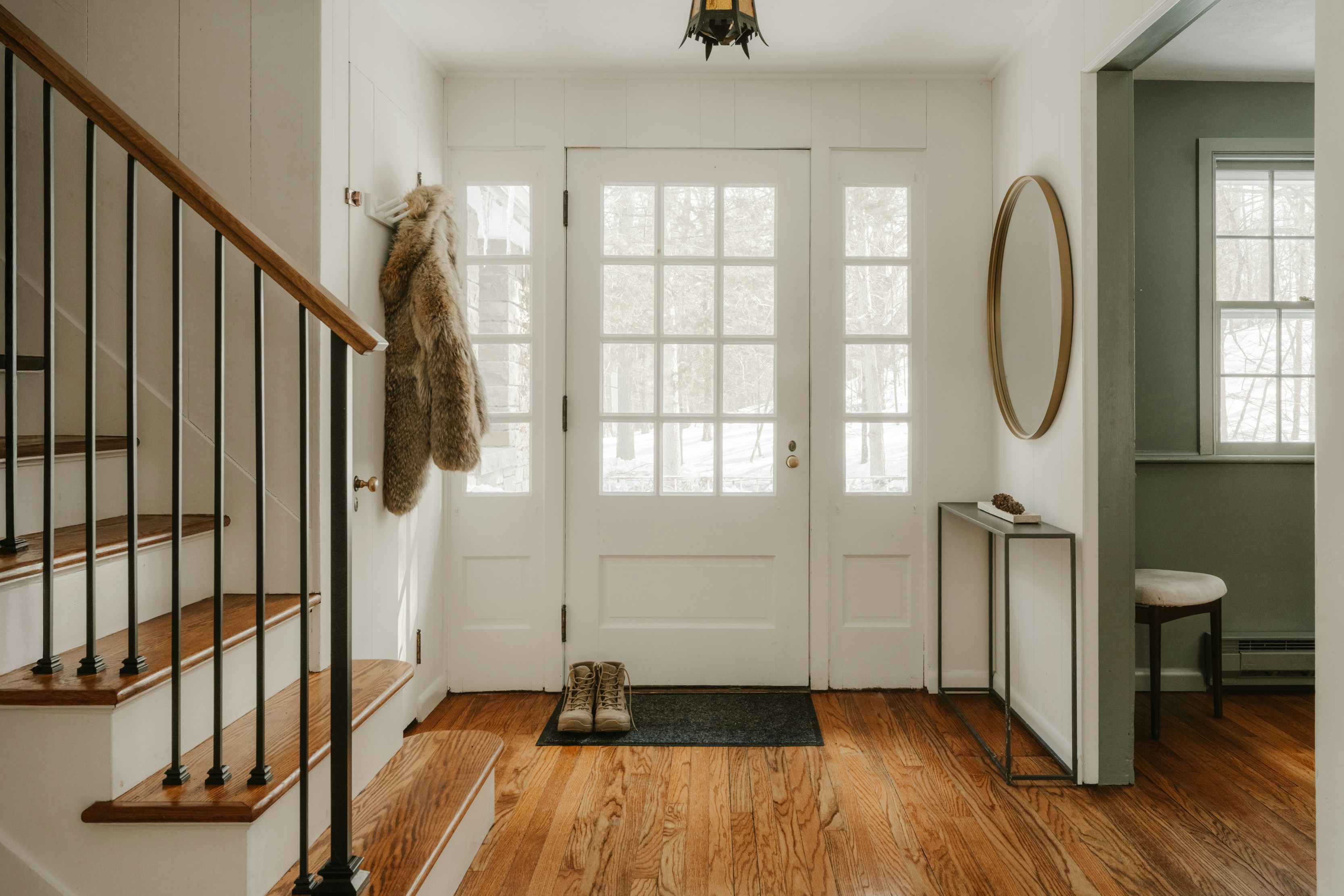
The entryway is often the smallest part of a home—and somehow the place where everything ends up.
Shoes pile up by the door. Bags land on the nearest chair. Keys disappear just when you're running late, and jackets somehow multiply overnight.
The answer isn't necessarily a bigger entryway or a perfectly styled mudroom. It's creating a few simple places for the things your family brings home every day.
These 10 entryway organization finds can help make that happen. Some are worth buying if you're short on space; others are easy to try with things you may already own.
1. A slim shoe rack that gets shoes off the floor
Best for: Busy households where shoes collect near the front door.
A shoe rack gives everyday footwear a designated home instead of letting it spread across the entryway. If your space is narrow, look for a slim vertical design rather than a wide bench-style unit.
Browse slim shoe racks on Amazon to find options that fit your available width.
Worth knowing: Count the pairs you actually want to keep by the door. You probably don't need space for every pair of shoes in the house—just the ones used regularly.
Worth it if: Shoes are the main source of clutter and you have a little floor space to spare.
2. An over-the-door hook rack for coats and bags
Best for: Small entryways without a coat closet or enough wall space.
A hook rack turns an otherwise unused surface into a place for jackets, backpacks, reusable bags, and everyday accessories. An over-the-door version can be particularly useful in rentals where you don't want to drill into the walls.
Consider the Brightroom six-hook over-the-door rack at Target or browse over-the-door coat hooks on Amazon.
Worth knowing: Check the thickness of your door and the clearance at the top. Make sure the door still closes properly with the rack installed.
Worth it if: Coats and bags end up on chairs, banisters, or the floor because there's nowhere else to hang them.
3. A small catchall tray for keys and everyday essentials
Best for: Anyone who regularly misplaces keys, sunglasses, or earbuds.
A dedicated landing spot can save you from the daily search for things you need on your way out. A small tray on a console table or shelf is often enough.
Explore small entryway catchall trays on Amazon.
Worth knowing: Keep it small. A large tray can quickly become a dumping ground for receipts, mail, loose change, and anything else that comes through the door.
Worth it if: You frequently lose track of small essentials. If you already have a suitable bowl or dish, use that before buying something new.
4. A storage bench that does double duty
Best for: Families who need somewhere to sit while putting on shoes.
A storage bench combines seating with a place to keep footwear, hats, scarves, or other everyday items. It can be especially useful in a small entryway where there's no room for separate furniture.
Browse entryway storage benches on Amazon.
Worth knowing: Measure the available depth carefully, including the space needed to open a lid or pull out a drawer. A bulky bench can make a narrow walkway feel even smaller.
Worth it if: You have enough floor space and want seating plus hidden storage in one piece of furniture.
5. A wall-mounted mail organizer
Best for: Households where letters, school notices, and paperwork collect on the nearest flat surface.
Paper clutter becomes easier to manage when it has a designated home. A wall-mounted organizer can separate incoming mail, paperwork that needs attention, and items that are ready to file.
Look at wall-mounted mail organizers on Amazon.
Worth knowing: Choose a system with only as many sections as you genuinely need. Too many categories can turn a simple organizer into another system to maintain.
Worth it if: Paper tends to accumulate on your kitchen counter or entryway table.
6. A basket for everyday bags and accessories
Best for: Reusable shopping bags, hats, scarves, dog-walking supplies, and other grab-and-go items.
A sturdy basket can contain the small things that otherwise drift around the entryway. It works particularly well for soft items that don't need individual compartments.
Browse entryway storage baskets on Amazon.
Worth knowing: One basket is usually enough to start. If you add a basket for every category of item, you may end up organizing clutter rather than reducing it.
Worth it if: You have several small, frequently used items that need a shared home.
7. A vertical shoe organizer for doors or closets
Best for: Tiny entryways with very little floor space.
When you can't spread storage out horizontally, look upward. A hanging organizer can hold shoes or smaller accessories behind a door or inside a closet.
The Brightroom 26-shelf over-the-door organizer at Target is one option to consider. You can also compare over-the-door shoe organizers on Amazon.
Worth knowing: Not every pocket is large enough for bulky shoes, and some doors won't accommodate a hanging organizer comfortably. Check the dimensions and intended use before buying.
Worth it if: Your household has more shoes than your entryway can reasonably accommodate.
8. A small wall shelf with hooks underneath
Best for: Narrow entryways where floor space is limited.
A shelf with hooks combines a place for small essentials with hanging space for coats, hats, or bags. It can be a useful alternative to a full console table.
Explore entryway wall shelves with hooks on Amazon.
Worth knowing: Check the installation requirements and the type of wall you have. If you're renting or can't drill into the wall, a freestanding shelf or over-the-door rack may be a better fit.
Worth it if: You want to use vertical space and have somewhere suitable to install it.
9. A small labeled bin for each family member
Best for: Families with children who bring home backpacks, hats, sports gear, and school accessories.
Individual bins give everyone a clear place for their own everyday items. They can sit on a shelf, beneath a bench, or inside a closet.
Browse small stackable storage bins on Amazon.
Worth knowing: Labels only help if the bins are easy to reach and everyone can put things away independently. For younger children, simple picture labels can be more useful than written ones.
Worth it if: Belongings get mixed together or one person's things regularly end up scattered around the house.
10. A slim rolling cart for an awkward corner
Best for: Entryways with a narrow gap beside a cabinet, closet, or wall.
A narrow rolling cart can make use of a gap that might otherwise be wasted. Depending on the location, it could hold shoes, dog-walking supplies, umbrellas, or other small items.
Compare slim rolling storage carts on Amazon.
Worth knowing: Measure the narrowest part of the space and check whether there's enough room to pull the cart out. Wheels are only useful if the cart can move freely.
Worth it if: You have a genuinely usable narrow gap and a specific category of items to store there.
Before you buy anything, try this 10-minute entryway reset
You may not need all—or any—of these products. Start with the following steps before adding another organizer to your home.
1. Remove everything from the entryway. Put away anything that belongs in another room, and set aside items you no longer use.
2. Keep only everyday essentials nearby. Seasonal shoes, extra coats, and occasional-use items can live somewhere else.
3. Give each category one home. Shoes go in one place, bags in another, and keys somewhere easy to reach.
4. Identify the actual problem. If the floor is crowded, you may need vertical storage. If paperwork is the issue, a shoe rack won't help. Choose a solution that addresses the source of the clutter.
5. Try your existing storage first. A spare basket, a bowl for keys, or a few existing hooks may be enough to make a noticeable difference.
The bottom line
An organized entryway doesn't need to look like a showroom. It needs to work on a busy weekday morning when everyone is trying to leave the house at once.
Start with the biggest source of frustration, choose a solution that fits your space, and resist the temptation to buy an organizer for every little thing.
Sometimes, a shoe rack or a few well-placed hooks can make a meaningful difference. Sometimes, moving items that don't belong near the door is all it takes.
The goal isn't to create more storage for the sake of it. It's to make coming home—and leaving again—a little easier.
Leave a Reply